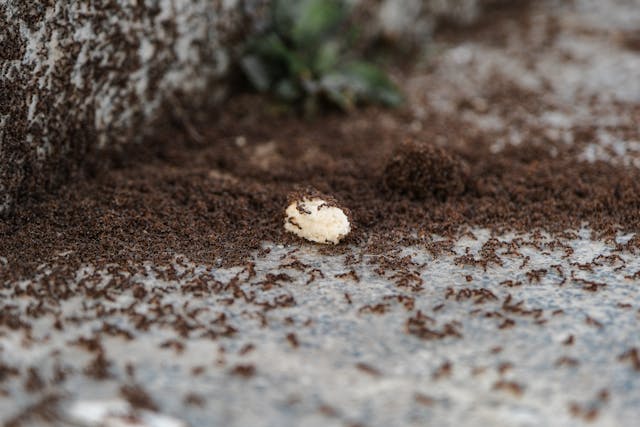
You spotted a trail of small yellowish-brown ants near your bathroom, crawl space, or a window frame. They’re not carpenter ants — those are bigger. And they don’t smell like blue cheese when you squish them, so they’re not odorous house ants either. There’s a good chance you’re dealing with moisture ants.
Moisture ants are one of the most common ant problems in Washington State, and for good reason: the Pacific Northwest’s wet climate creates exactly the conditions these ants love. But here’s the thing — finding moisture ants in your home isn’t just an ant problem. It’s usually a sign of something bigger going on underneath or inside your walls.
In this guide, we’ll cover everything you need to know: what moisture ants are, how to identify them, why they’re showing up, and what to do about them.
What Are Moisture Ants?
“Moisture ant” isn’t one specific species — it’s a common name used to describe several ant species that are strongly attracted to damp, decaying wood and high-moisture environments. In Washington State, the most common moisture ant is the cornfield ant (Lasius alienus), though yellow moisture ants (Lasius flavus) are also frequently found.
Here’s how to identify them:
- Size: Small, typically around 1/8 inch long — noticeably smaller than carpenter ants.
- Color: Yellow to dark brown, often with a slightly translucent appearance.
- Shape: Monomorphic, meaning all worker ants in the colony are the same size (unlike carpenter ants, which vary).
- Behavior: Often found near water sources, rotting wood, crawl spaces, window sills, and bathrooms.
In the wild, moisture ants nest in rotting logs and stumps. Inside your home, they’re seeking the same thing: damp, soft, decaying wood. That’s what makes their presence such an important warning sign.
Moisture Ants vs. Carpenter Ants: What’s the Difference?
Washington homeowners often confuse moisture ants with carpenter ants, since both are found near wood. Here’s how to tell them apart:
- Size: Carpenter ants are much larger — typically 1/4 to 1/2 inch. Moisture ants are small, around 1/8 inch.
- Color: Carpenter ants are usually black or dark red-black. Moisture ants are yellow to medium brown.
- Wood damage: Carpenter ants excavate wood to nest in it, leaving behind smooth, clean galleries. Moisture ants don’t damage structural wood — they only nest in wood that is already rotted or softened by moisture.
- What they signal: Both are a problem, but for different reasons. Carpenter ants can cause structural damage on their own. Moisture ants are telling you there’s already a moisture or rot problem that needs to be addressed.
Why Are Moisture Ants in My House?
If moisture ants have made it inside your home, they’ve found moisture — and almost certainly decaying wood. In Washington, the most common sources include:
- Crawl space moisture problems: Crawl spaces in the Pacific Northwest are notorious for humidity buildup, condensation, and standing water. Rotting floor joists and beams are prime moisture ant habitat.
- Leaking pipes or plumbing: A slow leak under a sink, behind a wall, or around a toilet can go undetected for months while quietly softening the surrounding wood.
- Roof leaks: Water intrusion from the roof can travel down into wall cavities, creating hidden pockets of damp wood.
- Poorly sealed windows and doors: Water infiltration around window frames is a common entry point for moisture ants, especially in older homes.
- Deck and porch wood: Exterior wood that’s not properly sealed or maintained deteriorates quickly in Washington’s wet winters and becomes a nesting site.
This is the most important thing to understand about moisture ants: eliminating the ants without fixing the moisture source will not solve the problem. New colonies will return as long as the conditions that attracted them remain.
Signs You Have Moisture Ants
Beyond seeing the ants themselves, here are other signs to watch for:
- Ant trails near water: Trails along baseboards, around pipes, near window frames, or in bathrooms and laundry rooms.
- Winged ants (swarmers): Reproductive moisture ants will swarm, usually in late summer. Seeing winged ants indoors is a strong signal of an established indoor colony.
- Soft or spongy wood: If you notice discolored, soft, or crumbling wood near where ants are active, moisture damage is likely present.
- Musty odor: A musty smell in crawl spaces or near walls can indicate both moisture ant activity and the mold that often accompanies it.
How to Get Rid of Moisture Ants
Getting rid of moisture ants requires a two-part approach: treating the ants and fixing the underlying moisture problem. Here’s how it works:
Step 1: Find and Fix the Moisture Source
This is the most critical step. A professional pest inspector can help identify where the moisture is coming from. Common fixes include:
- Crawl space cleanup and vapor barrier installation
- Repair of leaking pipes, gutters, or roofing
- Improved ventilation in attics and crawl spaces
- Replacement of rotted wood
Step 2: Treat the Ant Colony
Once the moisture source is identified, a pest control professional will treat the active colony using targeted, eco-friendly products. This typically involves baiting and direct treatment of nesting areas. DIY sprays may kill visible ants temporarily but rarely eliminate the colony, and won’t address the underlying problem.
Step 3: Prevent Future Infestations
After treatment, your technician will advise on steps to make your home less hospitable to moisture ants going forward. This may include:
- Sealing cracks and gaps in your foundation and exterior walls
- Keeping firewood stored away from the house
- Ensuring gutters drain away from the foundation
- Scheduling regular crawl space inspections
Why Washington Homes Are Especially Vulnerable
Moisture ants thrive in exactly the conditions that define the Pacific Northwest: high annual rainfall, mild temperatures, and the kind of persistent humidity that seeps into crawl spaces and wall cavities over decades. Older homes in the greater Seattle area — Bellevue, Kirkland, Issaquah, Renton, and surrounding communities — are particularly susceptible, as building materials age and original moisture barriers break down.
If you’re seeing moisture ants, you’re not alone. It’s one of the most common calls we get throughout King and Snohomish counties, especially in spring when ant activity picks up alongside the rain.
When to Call a Professional
You should call a pest control professional if:
- You’ve seen moisture ants inside your home, especially near wood structures, crawl space access points, or plumbing.
- You’ve noticed soft, discolored, or damaged wood anywhere in or around your home.
- You’ve seen winged ants indoors, which signals an established colony.
- DIY treatments haven’t solved the problem after a few weeks.
Moisture ants are a warning system. The sooner you act, the less damage you’ll be dealing with in the long run — both from the moisture itself and from any secondary issues like mold or wood rot it brings with it.
Get Help With Moisture Ants in Washington
Willard’s Pest Control has been serving homeowners across King, Pierce, Snohomish, and Kittitas counties for years. We specialize in moisture ant removal and can help identify and address the underlying moisture issues that are attracting them to your home.
If you’re dealing with ants in Bellevue, Kirkland, Issaquah, Renton, Seattle, or the surrounding area, give us a call at (425) 820-1980 or contact us online to schedule an inspection.