Somewhere around the first stretch of cool nights and still-warm afternoons, a south-facing wall turns into a landing strip. Slow-moving gray flies pile up at the windows. Black-and-red bugs cluster in the hundreds on siding, fences, and porch railings. Neither one is doing structural damage, and neither is the rodent-and-moisture story we’ve covered elsewhere on this blog. They’re after something different: a place to sleep through winter.
Here’s why these two show up together every fall, how to tell them apart, and what actually helps.
Why They Show Up Together Every Fall
Cluster flies and boxelder bugs have almost nothing in common biologically, but they run the same seasonal playbook. Both spend summer breeding outdoors, both are triggered by the same combination of shortening days and dropping temperatures, and both are looking for an adult to survive winter in, not a place to raise young indoors. Entomologists sometimes describe it as a race to find shelter before the cold sets in for good, and homes with a lot of south- or west-facing wall space tend to be the ones that win that race for the bugs.
Boxelder bugs make the shift the most visibly. Washington State University entomologist Richard Zack has described their fall movement as a kind of stampede, with large numbers converging on buildings as cooler temperatures and shorter days signal it’s time to find winter shelter. They’re not picky about the building. They’re picky about the wall.
Cluster Flies vs. Boxelder Bugs: Quick ID
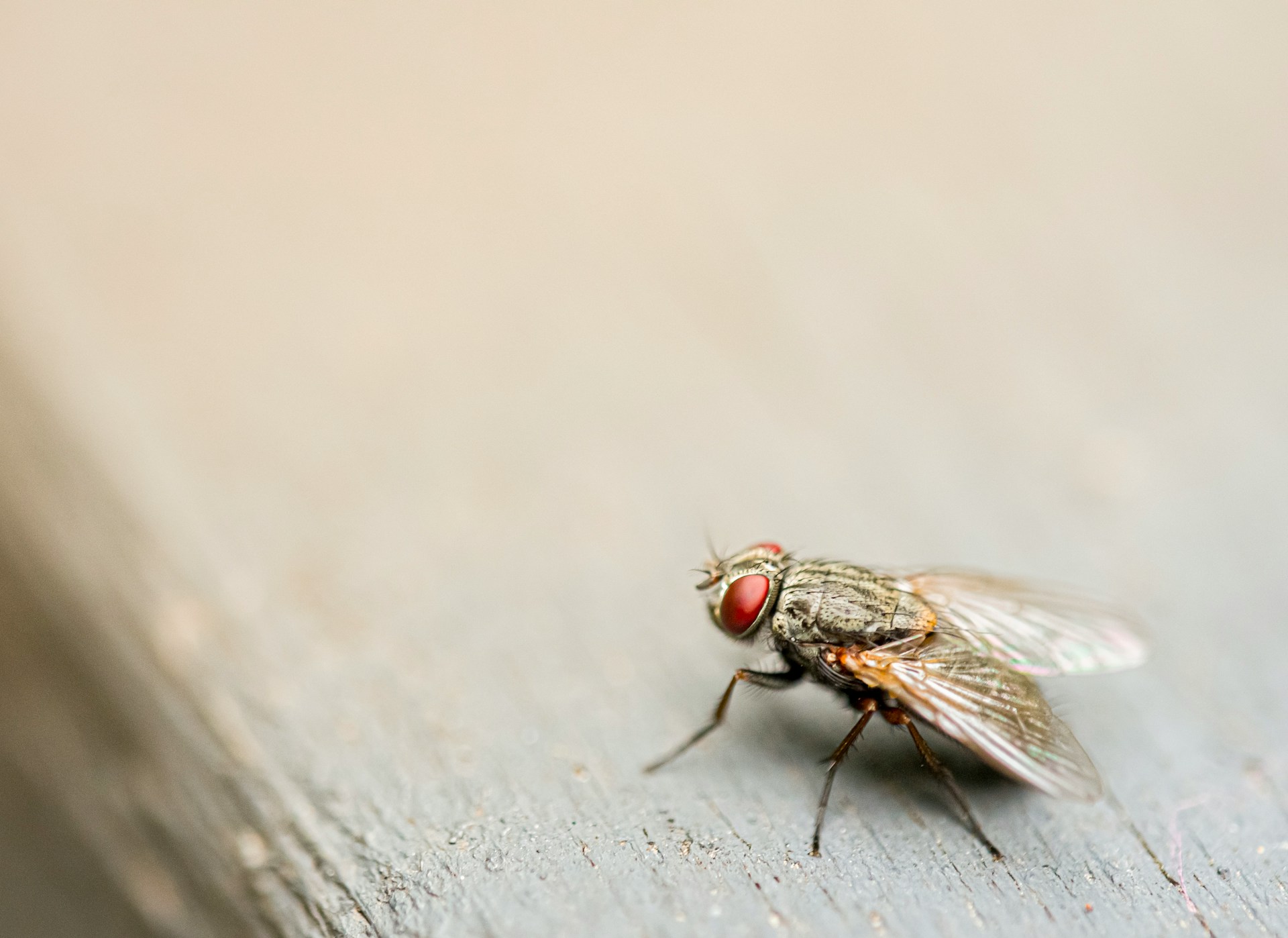
Cluster flies are dull gray, slightly larger than a typical house fly, with fine golden hairs on the thorax that give them a faint sheen. They move slowly and tend to bump against windows rather than dart around. Their larvae develop as parasites of earthworms, not anything found inside a house, which is part of why an infestation can show up in an otherwise spotless home with no obvious cause.
Boxelder bugs are harder to miss. Adults are about half an inch long, black with three distinct red lines, and they cluster in large, visible groups rather than showing up one or two at a time. Their numbers track closely with nearby boxelder or maple trees, since that’s where the previous generation fed and bred over summer.
Getting the ID right matters because the two call for different approaches. A cluster fly problem usually points back to exterior sealing and, in bad years, a professionally timed perimeter treatment applied before the flies start seeking shelter. A boxelder bug problem often has more to do with what’s growing near the house.
Where They Gather and Get In
Both pests favor the same real estate: warm, sun-exposed walls, especially south and west exposures, where siding stays a few degrees warmer than the shaded side of the house well into fall. From there, they work their way toward the same gaps that let in cold-weather rodents and drafts alike, siding seams, foundation cracks, attic and soffit vents, and loose window and door casings.
This is also where a homeowner’s own exterior maintenance starts to matter. Torn window screens, unsealed utility penetrations, and gaps around trim boards all give these insects an easy way from the sunny side of the wall to the inside of it, and a home that’s already due for some exterior sealing tends to draw a bigger cluster than one that isn’t.
Why They’re a “Nuisance,” Not a Damage Pest
Neither insect bites, stings, or breeds indoors, and neither one will chew wiring or structural wood the way a rodent might. The problem is almost entirely volume and mess. A cluster fly infestation can mean dozens of sluggish flies reappearing at the windows every time the furnace kicks on and warms the wall void they’re sheltering in. Boxelder bugs release a noticeable, unpleasant odor and can leave reddish stains when crushed, which is reason enough to vacuum them up rather than swat them on the wallpaper.
That’s a genuinely different kind of problem than the rodent and mold issues covered elsewhere on this blog, and it’s worth setting expectations accordingly. This isn’t a structural risk. It’s a numbers-and-nuisance one, and the fix is proportional.
Regional Notes for Western Washington
Boxelder bug pressure tracks pretty directly with tree cover. Neighborhoods with mature maples and boxelder trees, common across the older, established parts of King, Pierce, and Snohomish County towns, tend to see bigger clusters than newer developments with younger, less established landscaping. Cluster flies are less tied to any one tree species and more to lawn and soil conditions that support earthworms, which describes most of the Puget Sound lowlands well.
East of the Cascades in Kittitas County, the drier soil supports fewer earthworms, so cluster fly pressure tends to run lighter there. Boxelder bugs are still a factor wherever boxelder and maple trees grow, but the sharper day-to-night temperature swing that pushes rodents indoors earlier in that region seems to move these insects along a similar earlier timeline as well.
Prevention Checklist
- Walk the exterior in late summer, before the first cool nights, and seal cracks around siding, trim, and utility penetrations with caulk or expanding foam
- Repair or replace torn window and vent screens
- Rake and clear fallen boxelder or maple seeds from patios, driveways, and grassy areas near the house
- Vacuum clusters rather than crushing them, since crushed boxelder bugs stain and cluster flies leave a lingering odor
- If cluster flies have been a recurring problem, ask about a professionally timed exterior treatment applied in early fall, before the flies begin seeking shelter, since a treatment applied after they’ve already clustered has a much smaller window of effectiveness
When to Call a Professional
Sealing and cleanup handle most one-off years. A recurring, heavy cluster year, especially on homes where flies keep reappearing at the same windows every winter, usually calls for exterior perimeter treatment timed to hit before the insects move in rather than after. That timing is the part homeowners tend to miss on their own. Willard’s covers this as part of our general exterior treatment approach, which includes the same exclusion work described on our Kirkland, Bellevue, and Seattle service pages, applied at the right point in the season rather than after the bugs have already settled in for winter.
Frequently Asked Questions
Are cluster flies or boxelder bugs dangerous to my family or pets?
No. Neither bites, stings, nor carries disease. The concern is volume and the odor or staining that comes with crushing them, not any health risk.
Why do I have hundreds of boxelder bugs when my neighbor has none?
It usually comes down to trees. Boxelder bug populations build up on nearby boxelder or maple trees over the summer, so a home near a mature seed-bearing tree will see far more activity than one that isn’t.
I don’t have a boxelder tree nearby. Why do I still have them?
Boxelder bugs are strong fliers and can travel a fair distance from their host tree once they start looking for winter shelter, so a lack of boxelder trees on your own property doesn’t rule them out if there’s one within a block or two.
If either of these has taken over a wall of your house this fall, reach out and we can walk through whether sealing alone will do it or whether a timed exterior treatment makes sense before winter sets in.