Quick answer: Overwintering bugs are insects that move into homes in the fall to wait out winter in walls and attics. In Washington, the most common are western boxelder bugs, brown marmorated stink bugs, western conifer seed bugs, multicolored Asian lady beetles, and cluster flies.
- They are a nuisance, not a danger. They do not damage homes, eat stored food, or reproduce indoors.
- They appear on warm winter days when heat wakes them and they wander toward windows and light.
- Exclusion works best. Seal gaps around windows, siding, and vents by early September, before they move in.
- Vacuum, do not squash, the ones already inside to avoid odors and stains.
Every fall, Washington homeowners notice a new crop of houseguests. Bugs line up on sunny siding in October, cluster around upstairs windows in November, and then show up on the kitchen ceiling during a mild week in February. Most of them are not here to eat your food or breed in your walls. They are looking for a quiet, protected place to wait out the winter, and your house happens to fit the bill.
Entomologists call these insects overwintering pests (sometimes “occasional invaders”). Below is a guide to the most common ones in King, Pierce, Snohomish, and Kittitas Counties, how to tell them apart, and what actually works to keep them out.
What Does “Overwintering” Mean?
Many insects survive winter in a dormant state called diapause, a kind of suspended animation where they stop feeding, developing, and reproducing. Outdoors, they ride out the cold under loose bark, in leaf litter, or in rock crevices. Wall voids, attics, and the gaps behind siding and window trim are simply a better version of the same thing.
That creates the classic overwintering pattern:
- Late summer to fall: Insects gather on warm, sun-facing walls and squeeze through small gaps.
- Winter: They sit quietly inside walls and attics. You may not see them at all.
- Warm days and late winter: Heat from your home or a sunny afternoon wakes some of them up. Instead of finding their way back outside, they wander into living spaces and gather at windows.
The good news: none of the insects below reproduce indoors. The ones you see in February are the same ones that moved in last October.
The Most Common Overwintering Bugs in Washington
1. Western Boxelder Bugs
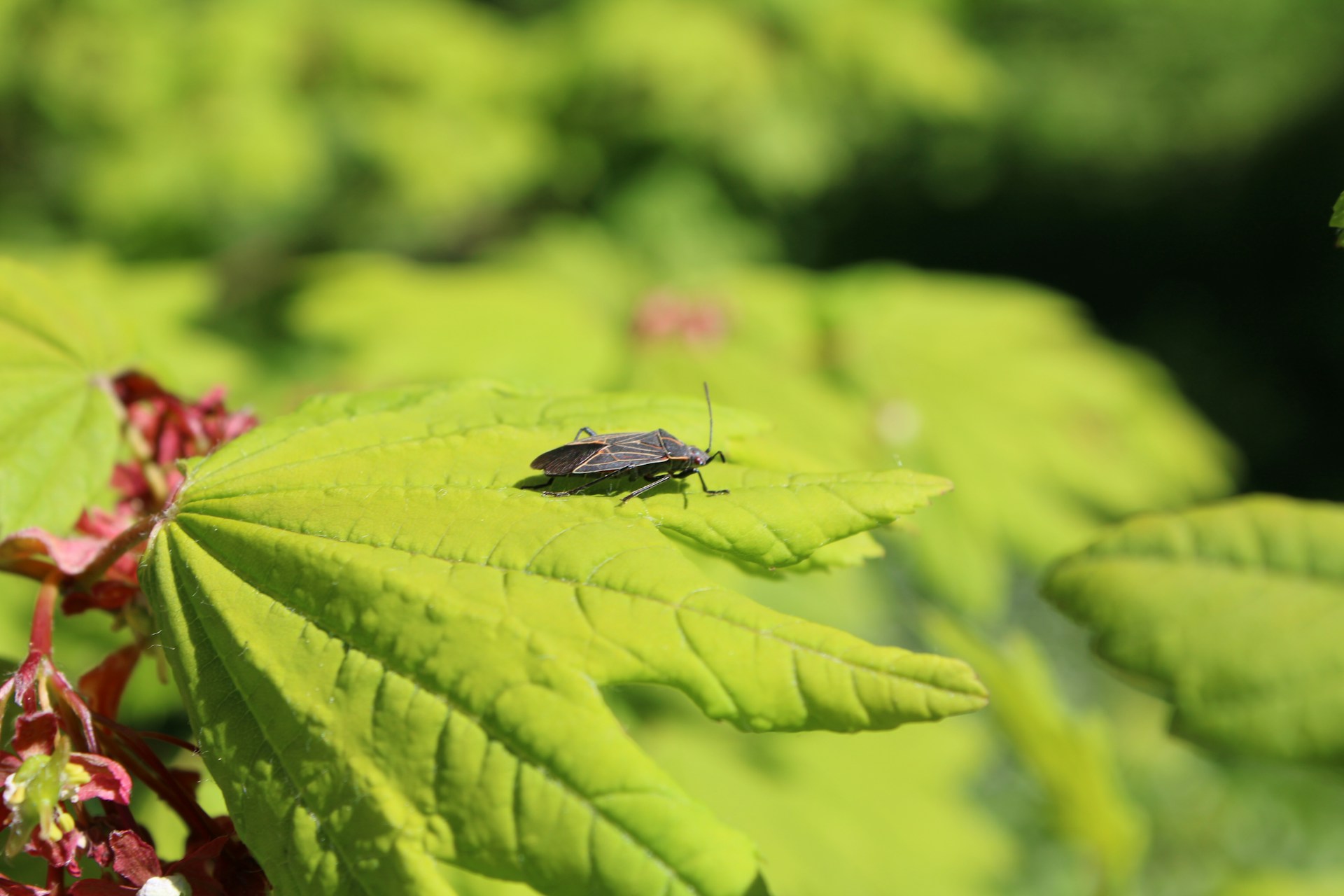
What they look like: About half an inch long, black with thin red-orange lines along the back and wing edges. Young nymphs are bright red.
Why they come in: Boxelder bugs feed mainly on the seeds of female boxelder trees and also use maples and ash. In the fall, adults gather by the hundreds on the south and west sides of buildings, especially homes near those trees. Washington State University’s PestSense fact sheet on western boxelder bugs covers their biology in more detail.
Are they harmful? No. They do not bite people, damage your home, or eat stored food. Their droppings can leave small reddish stains on curtains and light-colored walls, and crushing them releases an unpleasant smell.
2. Brown Marmorated Stink Bugs
What they look like: A mottled brown, shield-shaped bug about five-eighths of an inch long. Look for light bands on the antennae and alternating light and dark markings along the edge of the abdomen.
Why they come in: This invasive species arrived from Asia and was first confirmed in Washington in 2010. It has since spread across the state. According to WSU Extension, it is now found in almost every Washington county. Like boxelder bugs, adults look for sheltered spots in buildings each fall.
Are they harmful? Not to people or homes. They are a serious agricultural pest, though, and they live up to their name. Disturb or squash one and it releases a strong, lingering odor.
Not every “stink bug” is a stink bug. The large brown bug with long legs that many Seattle-area residents call a stink bug is often a western conifer seed bug, a native insect that belongs to a different family. More on that below.
3. Western Conifer Seed Bugs
What they look like: About three-quarters of an inch long, brown and narrow, with a faint white zigzag across the back and a flattened, leaf-like section on each hind leg. When they fly, they flash an orange and black abdomen and buzz loudly, a bit like a bumblebee.
Why they come in: These bugs are native to the West and feed on the seeds of Douglas-fir, pine, and other conifers. In the fall they look for a place to hibernate, and homes near evergreens get a lot of visitors. That makes them especially common in heavily wooded neighborhoods and in Kittitas County communities like Cle Elum and Suncadia.
Are they harmful? No damage to the home, and they rarely interact with people at all. They do release a piney, sharp odor when handled. Read our full guide to western conifer seed bugs in Washington for identification tips.
4. Multicolored Asian Lady Beetles
What they look like: A “ladybug” that ranges from pale yellow to deep red, with anywhere from zero to 19 black spots. The giveaway is a black “M” or “W” shape on the white area just behind the head.
Why they come in: Native ladybug species overwinter outdoors. This one, introduced from Asia, prefers buildings. It tends to gather on light-colored, sunlit walls on warm afternoons following cold nights. WSU has a fact sheet on the multicolored Asian lady beetle with more photos.
Are they harmful? They are helpful in the garden, where they eat aphids. Indoors, they can occasionally give a small pinch of a bite, and when disturbed they release a yellowish fluid that smells bad and can stain fabric and paint. Some people are allergic to them.
5. Cluster Flies
What they look like: Slightly larger than a house fly, dull gray, with golden hairs on the thorax. They are noticeably slow and sluggish, especially on cold days.
Why they come in: Cluster fly larvae develop inside earthworms, so homes near lawns, pastures, and open fields see the most activity. Adults move into attics and wall voids in late summer and early fall. They are sometimes called “attic flies” because that is where they concentrate. On sunny winter days, they wake up and buzz around upstairs windows. Colorado State University Extension notes that sealing a building before they move in is the key to control.
Are they harmful? They do not bite, and they do not breed indoors. However, large numbers of dead flies in an attic can attract carpet beetles and other scavengers in spring. If you are finding piles of dead flies upstairs, it is worth having the attic checked.
Quick Identification Chart
| Bug | Size | Key feature | Where you will see them | Smell when disturbed? |
|---|---|---|---|---|
| Western boxelder bug | 1/2 inch | Black with thin red lines | Sunny south and west walls, windows | Yes, mild |
| Brown marmorated stink bug | 5/8 inch | Shield shape, banded antennae | Window frames, curtains, light fixtures | Yes, strong |
| Western conifer seed bug | 3/4 inch | Flattened hind legs, loud buzz in flight | Homes near conifers, ceilings, windows | Yes, piney |
| Asian lady beetle | 1/4 to 1/3 inch | “M” mark behind the head | Light-colored walls, upper windows | Yes, plus yellow stain |
| Cluster fly | 3/8 inch | Golden hairs, very sluggish | Attics, upstairs windows | Faint, sweet |
Why Western Washington Homes Are Prime Real Estate
A few local factors make overwintering bugs a regular part of fall and winter here:
- Evergreen neighborhoods. Douglas-fir and pine stands across the Eastside, Snohomish County, and the Cascade foothills support big populations of conifer seed bugs.
- Older homes with lap siding and original windows. Settled trim, gaps in siding, and worn weatherstripping give insects easy entry. These are the same gaps rodents use, as we covered in why fall rain sends rodents indoors.
- Mild, variable winters. Our winters swing between cold snaps and surprisingly warm, sunny days. Every warm stretch wakes up a batch of overwintering bugs inside the walls, which is why so many people see them in January and February.
- Attic and crawl space ventilation. Vents are essential for controlling moisture, but unscreened or damaged vent covers let insects (and larger pests) straight in.
How to Keep Overwintering Bugs Out
Because these insects do not breed indoors, the goal is exclusion: stopping them from getting in to begin with. Spraying inside your living space does very little, since the bugs are hiding in walls you cannot reach.
Seal Entry Points Before Fall
- Caulk gaps around window and door trim, siding joints, and where utility lines and pipes enter the house.
- Replace worn door sweeps and weatherstripping.
- Repair torn window screens and add fine mesh behind attic, soffit, and crawl space vents.
- Check the gap where siding meets the foundation and where the roofline meets the walls.
Reduce What Draws Them In
- Pay attention to the warm, sunny sides of the house (typically south and west). That is where bugs gather first.
- If boxelder bugs are a yearly problem, female boxelder trees near the house are usually the source.
- Switch exterior lights to warm or yellow bulbs to attract fewer flying insects in early fall.
Remove the Ones Already Inside
- Vacuum, do not squash. A vacuum avoids the smell and the stains. Empty the bag or canister outside right away.
- For cluster flies, focus on the windows of upstairs rooms on sunny days, when they are most active.
- Skip indoor foggers. They will not reach bugs in wall voids, and they leave residue in your living space.
When to Call a Professional
A few bugs on the windowsill is normal. It is worth calling a pest control professional if:
- You are seeing dozens of bugs a day, or the same rooms fill up every winter.
- You find large numbers of dead insects in the attic or wall cavities.
- You are not sure what you are looking at, or you suspect the “bugs” are something else, such as ant swarmers or cockroaches.
- You want a targeted exterior treatment timed for late summer, before bugs move in.
A thorough inspection also often turns up the gaps that let in mice and rats during the same season. If an attic has piles of dead insects or signs of rodents, attic cleaning and decontamination removes the debris that attracts scavengers in spring.
Willard’s Pest Control serves homeowners across Seattle, Bellevue, Kirkland, and the rest of King, Pierce, Snohomish, and Kittitas Counties. Contact us to schedule an inspection.
Frequently Asked Questions
Why do I see more bugs in my house on warm winter days?
Overwintering insects are dormant inside your walls and attic. A sunny afternoon or heat from your home warms them up enough to become active. They move toward light, which brings them to windows and into living spaces.
Will overwintering bugs lay eggs in my house?
No. Boxelder bugs, stink bugs, conifer seed bugs, Asian lady beetles, and cluster flies do not reproduce indoors. They wait for spring and try to return outside to breed.
Are boxelder bugs or stink bugs dangerous to pets?
They are not venomous and do not bite pets. A dog or cat that eats one may drool or vomit because of the bad taste, but serious problems are uncommon. Call your veterinarian if a pet seems unwell.
What is the best way to get rid of stink bugs inside?
Vacuum them and empty the vacuum outside. Crushing them releases their odor. Long term, sealing gaps around windows, siding, and vents is what reduces the number that get in.
Are the ladybugs in my house real ladybugs?
If they are gathering indoors in large numbers, they are almost always multicolored Asian lady beetles. Look for the black “M” or “W” marking on the white area behind the head.
When should I seal my house to keep overwintering bugs out?
Late summer, ideally by early September. Most overwintering insects move into buildings in September and October, so sealing after they are already inside will trap them in your walls.